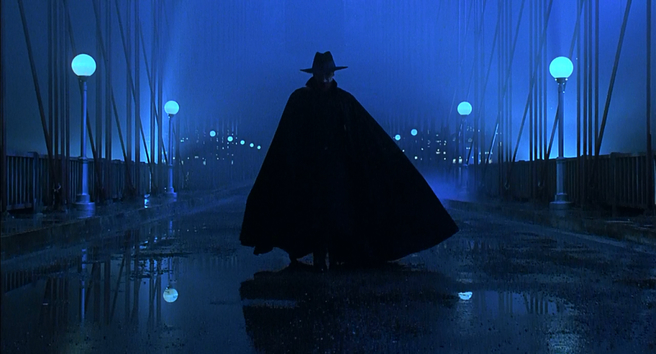
Some men are born with a mystery clinging to them like the smell of kerosene on an old rag. With B. Icky Wease, the mystery started the day he was born—or maybe the day he wasn’t born. The records say Imo, Oklahoma, June 31st, 1948. Go ahead, check your calendar. June 31st doesn’t exist. Never has. But there it is, neat as you please, stamped on the county ledger in faded black ink. Mistake? Joke? Something else? Nobody ever cleared it up. The man himself never did either. If you asked, he’d just smile that little smile of his, the one that said he knew something you didn’t, and wasn’t that the way he liked it.
He was a thief early on. Not the big glamorous kind of thief you see in movies, no diamond heists or briefcases stuffed with cash, but the small, needling kind. Gum from a store counter. A wallet left on a bench. A teacher’s pen. Petty larceny, they called it, though “petty” didn’t fit. It was compulsive, like scratching a rash. The schools tried to manage him, then tried to scare him, and finally just got rid of him. He was expelled more than once. His records got smudgy after that. A gap opened up in his story, a kind of foggy patch that no one’s been able to shine a light into.
Then he popped up at Lerbs Island High School. That was Nebraska, though the “island” part confused people who’d never seen it. Lerbs Island wasn’t some ocean jewel, just a spit of land out on Lake Wehrspann, where the water smelled of fish and rust and the wind could knock a hat right off your head. Wease played football and baseball there. He wasn’t terrible, wasn’t great, just a kid in a jersey, moving with the herd. His grades, though—that was another matter. Straight A’s, across the board. People whispered about him. Not in admiration, but suspicion. Rumors of cheating clung to him like burrs on a sock. No teacher ever caught him at it, but the feeling lingered: something wasn’t right.
After graduation, he enrolled at the University of Lerbs, a small college huddled on the same lake. Finance was his major. He cruised through it like a man walking downhill, grades shining as bright as a new dime. But ask his classmates, and they’ll tell you they rarely saw him studying. They’d be bent over their textbooks in the library at midnight, and Wease would be off somewhere else—nobody could ever say where. Yet, come exam time, he had all the answers. It was the same old story: the golden transcript, the empty desk.
When he left the university, he didn’t go into banking or brokerage like everyone expected. He didn’t go into anything that could be nailed down. Instead, he announced something called “the Lerbs Island Group.” No incorporation papers, no membership list, not even an office. Just a name. The way he said it, though—like the words themselves carried weight—you’d think it was a real empire. People asked what the group did. He’d give a different answer every time. Research. Investments. Strategic planning. The truth was, nobody knew. Nobody still knows.
Here’s what they do know: he always had money. Buckets of it. He spent like a man with a fire in his pockets. Houses, cars, parties, trips—lavish things that didn’t match the life of a small-time finance graduate from a small-time school. When people asked where it came from, he laughed. “From the group,” he said. That was all.
And then there was the plane. Not a little Cessna or Beechcraft like the doctors and lawyers bought when they wanted to play rich man on weekends. No, Wease had a Boeing 747. His own 747, hulking and white, parked at the Lerbs Island private airfield. That was his toy. He flew it in and out at odd hours, the roar shaking windows, rattling kitchen plates. Folks would look up from their porches and mutter, “There goes B. Icky again,” like it was the most normal thing in the world. But of course it wasn’t.
The government knew his name. He wanted them to. He was always knocking at the door with some new scheme, usually software. “Revolutionary,” he called it. “Cutting edge.” He pitched programs that would streamline this or protect that or spy on those other guys over there. He got contracts sometimes—little ones, big ones—but delivery was another matter. More than once the product never arrived, or what arrived didn’t work. Yet he kept circling back, like a crow who couldn’t help revisiting the same roadkill. Strangest of all, they let him. Maybe because he had the money, maybe because he had the charm. Or maybe because, like everyone else, the government couldn’t quite figure out what he was or where he came from.
Because that was the pattern with B. Icky Wease: the deeper you dug, the less you found. He was a man built on paper fog. The impossible birthdate, the vanished school years, the grades without studying, the company that wasn’t a company. If you lined up his life in a neat row, it looked solid. But if you tapped at it—just tapped—the whole thing rang hollow, like knocking on a coffin lid.
And maybe that’s the real story of B. Icky Wease. Not what he did, but what he made you believe. He wore mystery like armor. He let suspicion do his heavy lifting. He left gaps so big you could drive a truck through them, and people filled those gaps with whatever they wanted: genius, con man, secret agent, lunatic. Maybe he was all of those things. Maybe none.
What’s certain is this: he’s still out there. Still spending, still flying, still peddling software that may or may not exist. He’s the kind of man who can vanish into his own shadow, then come striding back out with a new story and a new smile. And if you ever hear the engines of a 747 thundering over Lake Wehrspann on a moonless night, you’ll know exactly who it is.